
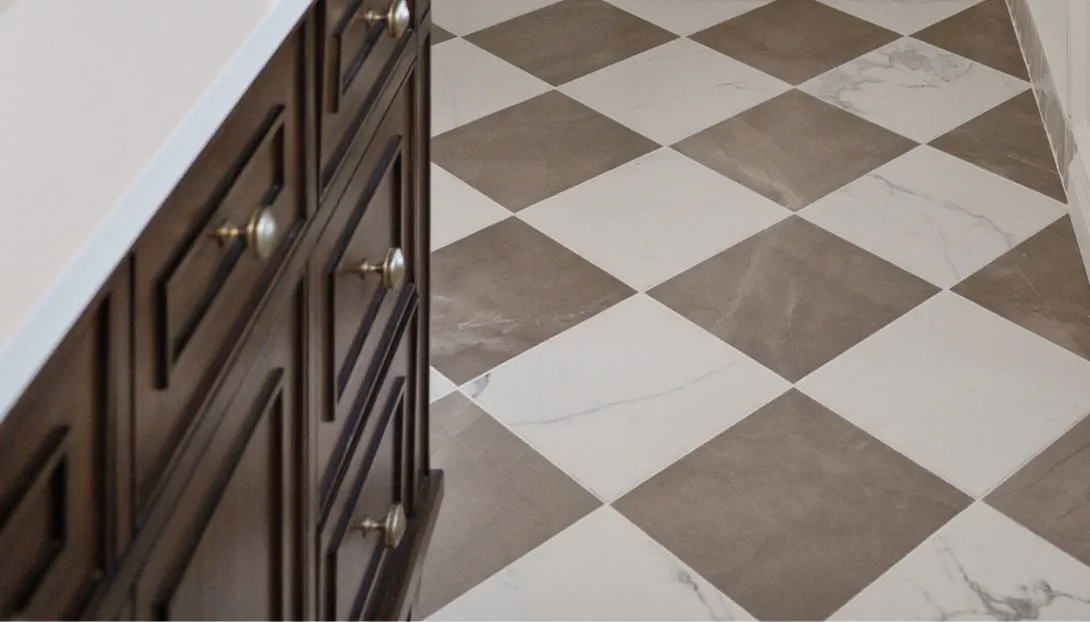
The best flooring for each room depends on moisture and foot traffic. Porcelain tile is the strongest choice for bathrooms, laundry rooms, and entryways. Hardwood, tile, or luxury vinyl all work in kitchens. Hardwood and engineered wood suit living areas, carpet suits bedrooms, and luxury vinyl or tile handles basements best.
A lot of homes end up with one floor running through every room, chosen once and never questioned. Then the hardwood by the dishwasher starts to cup, the carpet in the basement smells musty after a wet spring, and the tile in the bedroom feels cold every winter morning.
No single material is right everywhere. The best floor for a kitchen is a poor choice for a bedroom, and the reverse is true too.
This guide walks through each room in the house, what that room asks of a floor, and which materials hold up.
What Matters Most When Choosing Flooring
Three questions narrow the choice in any room.
How much water will it see? Bathrooms, kitchens, laundry rooms, and basements all deal with spills, splashes, or humidity. Wood and carpet don’t like moisture. Tile and vinyl handle it well.
How much traffic will it get? Entryways, hallways, and kitchens take the most wear. Bedrooms and offices take the least.
How should it feel underfoot? Tile is hard and cool. Carpet is soft and warm. Wood falls in between.
Moisture is the one that causes the most trouble. The EPA recommends keeping indoor humidity below 60 percent, ideally between 30 and 50 percent, and notes that porous materials like carpet may have to be thrown away if they become moldy.
Room-by-Room Flooring Guide
Here’s how the most common materials match up with each room.
| Room | Best choices | Use with care |
|---|---|---|
| Kitchen | Porcelain tile, hardwood, luxury vinyl | Carpet |
| Bathroom | Porcelain or ceramic tile, luxury vinyl | Hardwood, carpet |
| Living room | Hardwood, engineered wood, luxury vinyl | Tile, which can feel cold underfoot |
| Bedroom | Carpet, hardwood, engineered wood | Tile, if you want warmth underfoot |
| Basement | Luxury vinyl, porcelain tile, carpet tiles | Solid hardwood |
| Entryway and mudroom | Porcelain tile, natural stone, luxury vinyl | Carpet |
| Laundry room | Porcelain tile, luxury vinyl | Hardwood, laminate |
Kitchens: Durable, Easy to Clean, and Water-Friendly
Flooring is a common part of a kitchen remodel. Houzz reports that 65% of renovating homeowners upgrade their kitchen flooring.
The top picks are close. In the 2026 Houzz U.S. Kitchen Trends Study, ceramic or porcelain tile and hardwood tied for first at 22% each, followed by resilient flooring like vinyl at 21%, engineered wood at 15%, and laminate at 9%.
Tile wins on water resistance. Hardwood gives a warmer look and can flow into the rest of the main floor. Luxury vinyl offers the look of wood with more tolerance for spills. Wood tones are the top kitchen flooring color, chosen by 49% of homeowners in the same study.
If you’re planning a full kitchen remodel, choose the floor alongside the cabinets and countertops so the whole room works together.
Bathrooms: Tile Leads the Way
Bathrooms see more water than any other room, which makes porcelain tile the go-to choice. Under the ANSI A137.1 standard, porcelain tile must have a water absorption of 0.5% or less, which is why it holds up so well in wet spaces.
Tile also gives you the most design range. Houzz reported that searches for “bathroom checkerboard” more than doubled, up 103%, as homeowners look for patterns with more personality.
Luxury vinyl is a solid option for a guest bath or kids’ bath. Skip hardwood and carpet here.
For a bathroom getting a full update, tile work is often where the craftsmanship shows. One client who had us remodel their primary bathroom specifically praised the custom cabinetry and tile. Our bathroom remodeling services cover flooring, shower tile, and everything in between.
The right floor isn’t the trendiest one. It’s the one that matches what the room puts it through.
Living Rooms and Bedrooms: Comfort and Warmth
Living rooms and bedrooms are where comfort matters most.
Living rooms. Hardwood and engineered wood are classic choices with a warm look that suits most styles. Luxury vinyl is a good fit for busy households with pets or kids.
Bedrooms. Carpet is soft, quiet, and warm on cold mornings. Hardwood or engineered wood with an area rug gives you a cleaner look with some of the same comfort.
Home offices. Hardwood, engineered wood, or luxury vinyl all work, and they let a desk chair roll freely.
If you want one continuous floor across the main living areas, wood or wood-look vinyl is the easiest way to get it.
Basements, Entryways, and Laundry Rooms: Built for Wear
These rooms take the most abuse, from moisture to muddy shoes.
Basements. Below-grade spaces can be damp, so solid hardwood is a risk. Luxury vinyl, porcelain tile, and carpet tiles are better choices. Our guide to basement flooring materials covers the options in more detail.
Entryways and mudrooms. Porcelain tile and natural stone stand up to grit, water, and heavy traffic. Checkerboard patterns are popping up here too, with Houzz reporting a 38% jump in searches for “checkerboard floor.”
Laundry rooms. A washer leak can ruin wood or laminate. Porcelain tile and luxury vinyl are the safest bets.
Getting Started With New Floors
A little planning makes flooring decisions faster.
List your rooms. Note which ones see water, heavy traffic, or both.
Decide on continuity. Choose whether you want one floor flowing through the main level or different materials room by room.
See it first. Our 3D rendering service shows how a floor looks with your cabinets, walls, and furniture before installation.
Plan around your schedule. If you’re moving in or hosting soon, tell your contractor up front. One family had us remove their old floors and install new ones on a tight timeline so everything was done before their move-in date.
Ready to Choose Your New Floors?
Integral Renovations installs tile, hardwood, engineered wood, luxury vinyl, laminate, and carpet for homeowners in Buford and the surrounding area. Request a free quote to talk through the best flooring for each room in your home, or explore our tile and flooring services.
Frequently Asked Questions
What is the best flooring for a whole house?
Hardwood, engineered wood, and luxury vinyl are the most common choices for a continuous floor across the main living areas. Wet rooms like bathrooms and laundry rooms usually get tile instead.
What is the best flooring for a bathroom?
Porcelain tile is the top choice because it absorbs very little water. Under the ANSI A137.1 standard, porcelain must have a water absorption of 0.5% or less. Luxury vinyl also works well in bathrooms.
Is hardwood or tile better for a kitchen?
Both are popular. In the 2026 Houzz U.S. Kitchen Trends Study, ceramic or porcelain tile and hardwood tied as the top kitchen flooring materials at 22% each. Tile handles water better, while hardwood offers a warmer look.
What flooring is best for a basement?
Luxury vinyl and porcelain tile are the best choices for most basements because they handle moisture well. Carpet tiles work for a softer feel since damaged tiles can be replaced individually.
Should I use the same flooring throughout my house?
One continuous floor makes a home feel larger and more connected, but it doesn’t have to cover every room. Many homes use wood or wood-look flooring in living areas and tile in bathrooms, laundry rooms, and entryways.
What flooring is best for bedrooms?
Carpet is the most comfortable and quietest option for bedrooms. Hardwood or engineered wood with an area rug is a good choice if you prefer a hard surface.